
How Tile Sample Programs Work and What to Inspect
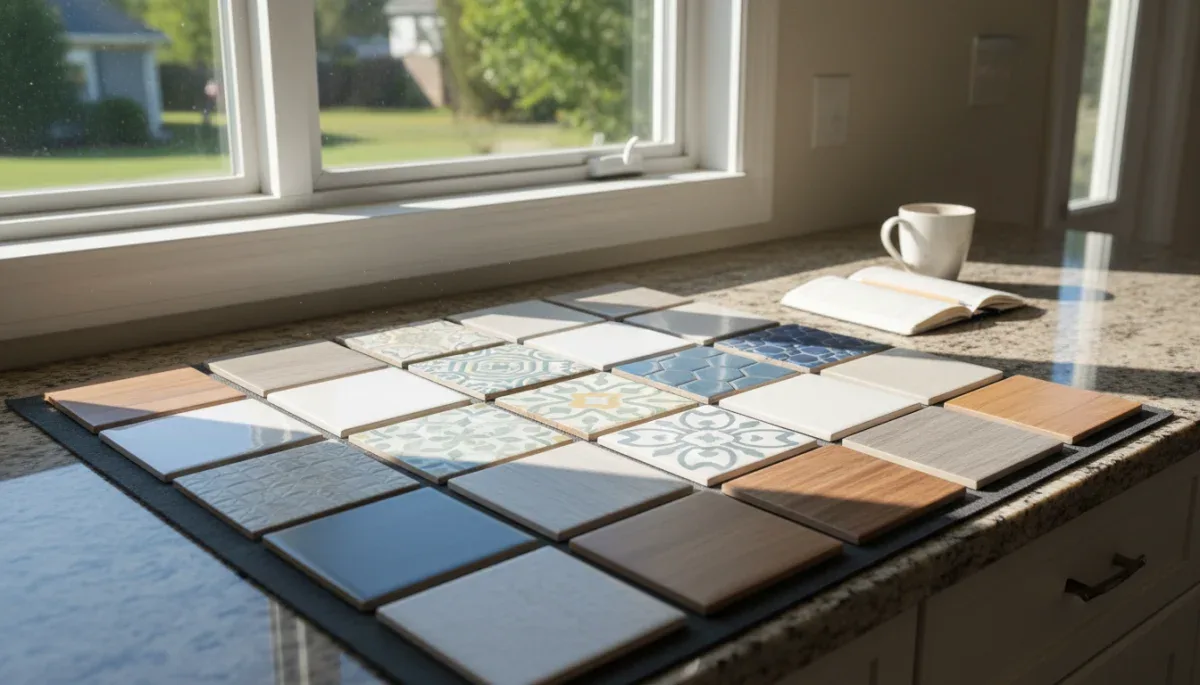
Tile sample programs allow homeowners to order individual pieces or swatches of ceramic, porcelain, glass, and natural stone before committing to an entire renovation project. This service helps shoppers confirm texture, exact color tone, edge profile, and thickness inside their actual living space, where showroom lighting can no longer distort the appearance of the material.
Ordering samples helps anyone planning a kitchen backsplash, bathroom floor, or entryway remodel, but the catch lies in varying retailer fees, partial swatch cuts, and subtle dye-lot variations that may occur between a sample piece and your eventual bulk shipment. Understanding retailer ordering limits, rebate policies, and light testing procedures ensures you make a fully informed purchasing decision.
How retailers structure sample orders and fees
Most home improvement retailers and dedicated tile distributors offer some version of a sample program, but their pricing models and fulfillment methods differ substantially across the industry. Big-box home centers such as The Home Depot and Lowe's commonly sell full individual tiles directly off the shelf in retail stores or online with standard shipping rates, allowing shoppers to buy single units at retail price. Specialty online tile retailers, such as TileBar, Fireclay Tile, or Floor & Decor, frequently run structured swatch programs that package multiple small pieces together for a flat fee.
At the time of writing, several online distributors charge between three and ten dollars per sample pack, often delivering three to five distinct options directly to your mailbox with complimentary parcel shipping. In contrast, heavy architectural slabs, large-format porcelain planks, or imported natural stones may incur higher freight or handling fees because of package weight and fragile shipping requirements. Retailers usually limit sample orders to a set number of pieces per household to prevent contractors and commercial builders from bypassing trade distribution channels.
Standard retailer sample policies
- Flat-rate sample boxes that bundle three to six swatches for a single upfront fee.
- Direct per-piece purchasing where shoppers pay the standard retail cost of one unit.
- Rebate incentives that apply the purchase price of your samples toward a qualifying bulk order.
- Strict quantity limits that cap sample orders between five and ten tiles per customer account.
Understanding swatch cuts versus full pieces

One critical detail buyers frequently overlook is whether a retailer ships an intact full tile or a machine-cut swatch. Mosaic sheets, patterned encaustic tiles, and standard subway shapes are frequently delivered as full, intact pieces. However, large-format floor tiles measuring twelve by twenty-four inches or larger are rarely shipped whole through sample portals. Instead, fulfillment warehouses slice full slabs down to four-by-four or six-by-six inch representative cutouts to keep shipping costs manageable and reduce package breakage during postal transit.
While cut swatches allow you to assess the core body, finish sheen, and approximate thickness of a tile, they do not show the broader repeating pattern or the full surface movement of veined porcelain and marble. A small cut taken from a high-variation stone product might show only solid white, while the actual cartons contain heavy charcoal veins or golden mineral deposits. When dealing with heavily patterned or varied materials, checking the manufacturer's variation rating—often denoted on product packaging from V1 for uniform appearance to V4 for substantial randomness—is essential before relying on a single compact swatch.
Furthermore, cut swatches rarely show factory edge profiles. Rectified tiles, which feature precision-ground straight edges designed for razor-thin grout lines, handle light reflection and grout spacing differently than traditional pressed tiles with soft, pillowed edges. If your swatch features raw, saw-cut edges on all four sides, it will not reveal how clean your finished joints will appear once installed across a room.
Evaluating undertones under morning and afternoon sun
Natural sunlight changes color temperature continuously throughout the day, altering how pigments in glazed tile and minerals in natural stone reflect into a room. Morning sunlight typically presents a crisp, cool blue-white tone with a high color temperature, which can emphasize cool gray undertones and make creamy ivories appear slightly muted. As the sun moves across the sky, afternoon and early evening light shifts toward warmer golden and amber wavelengths, which can dramatically alter neutral finishes.
A tile that appears like a clean, modern off-white in a brightly lit showroom can reveal surprising pink, green, or yellow undertones under low-angled western afternoon exposure. To properly assess these shifts, place your sample in the actual room scheduled for renovation rather than viewing it on an outdoor patio or in an adjacent hallway. Keep the sample in place for at least twenty-four to forty-eight hours, checking its appearance at dawn, noon, and sunset to verify that you like the color across every phase of daylight.
Key natural lighting observations to make
- Morning light reveals hidden cool gray or pale blue pigments in light glazes.
- Midday sun produces strong overhead glare that highlights surface pits, ripples, or glossy reflections.
- Late afternoon light warms up neutral surfaces, potentially pulling out yellow, beige, or pink hues.
- Overcast weather flattens surface contrast, demonstrating how the tile looks during low-light winter days.
Testing artificial lighting, color temperature, and angle
Once daylight fades, your indoor fixtures become the sole illumination source, making artificial light testing just as crucial as daytime viewing. Artificial lighting is measured in Kelvins (K), representing color temperature. Standard soft white household bulbs generally rate between 2700K and 3000K, emitting warm, reddish-yellow light that flatters traditional wood finishes but can muddy cool marble tiles. Conversely, daylight-rated bulbs between 4000K and 5000K cast a sharp, cool white beam that accentuates modern grays and whites but can make warm terracotta appear stark and sterile.
In addition to color temperature, the angle of your fixtures influences surface legibility. Floor tiles receive overhead ambient lighting, whereas wall tiles and backsplashes face directional task lighting from under-cabinet LED strips or recessed ceiling downlights. Angled beam spreads cause grazing light, an optical effect where light strikes a vertical surface at a sharp angle, casting micro-shadows behind every physical contour, wave, or imperfection in the glaze.
To simulate real installation conditions, hold wall samples vertically against your drywall directly beneath your actual light fixtures. For flooring projects, lay the sample flat on your subfloor or existing floor, never on an elevated kitchen island or tabletop. Looking down at a tile from standing height reveals how reflections, shadows, and gloss levels will appear during daily use, preventing unexpected surprises after professional installation.
Checking sheen, texture, and everyday maintenance
A tile sample program provides an opportunity to evaluate physical performance characteristics alongside visual aesthetics. Glossy finishes reflect maximum light and make compact spaces appear brighter, but they readily show water spots, fingerprints, soap residue, and dust motes. Matte and honed surfaces absorb light and provide a modern, grounded appearance, but their microporous or textured tops can collect dirt and require more aggressive scrubbing depending on the manufacturing technique.
Physical texture also dictates slip resistance, which is formally measured by manufacturers as the dynamic coefficient of friction (DCOF). For level interior spaces expected to get wet, such as bathroom floors or walk-in shower pans, national standards generally recommend a minimum DCOF rating of 0.42 to ensure adequate traction. While a small sample cannot simulate walking across a wet floor, rubbing a damp finger across the wet surface gives you an initial sense of grip versus slickness.
You can also use your sample to perform basic stain resistance checks using items common to the intended space. If you are choosing kitchen backsplash material, placing a drop of olive oil, lemon juice, or tomato sauce on an unsealed stone or crackle-glazed ceramic sample for fifteen minutes will demonstrate whether the surface absorbs stains or requires specialized penetrating sealers. Always confirm with retailer care sheets before applying aggressive chemical cleaners to delicate glazes.
Accounting for dye lots, grout colors, and batch variation
Tile production involves firing natural clays, minerals, and glazes at temperatures exceeding two thousand degrees Fahrenheit. Because kiln temperatures, humidity levels, and mineral compositions fluctuate slightly between production runs, manufacturers group finished tiles into specific dye lots and caliber sizes. The sample you receive in the mail represents a single production run from the past, meaning your final bulk order may exhibit subtle variations in shade depth, background tint, or physical dimensions.
When placing a final order, ensure all cartons share identical shade and caliber codes printed on the box exterior. Professional installers routinely open multiple boxes simultaneously and blend pieces throughout the room during installation, preventing distinct color blocking if slight dye-lot shifts exist. Furthermore, remember that grout color dramatically shifts how tile tones register to the human eye. Pairing a white tile with bright white grout creates a monolithic surface, whereas charcoal or gray grout frames each tile, drawing immediate focus to edge alignment and size uniformity.
At a glance
| Evaluation factor | What to know |
|---|---|
| Sample format | Large-format tiles are typically shipped as small cut swatches rather than complete slabs. |
| Lighting spectrum | Check samples across morning daylight, evening shadows, and nighttime artificial bulb temperatures. |
| Positioning angle | Inspect floor tiles lying flat on the ground and wall tiles mounted upright against your wall. |
| Order credits | Many online retailers refund your initial sample box fee when you place a full room order. |
Frequently asked questions
Can I get tile samples for free?
A few specialty retailers offer initial sample packs at no charge or run limited promotional codes, but most companies charge a nominal fee between three and ten dollars to cover picking, packaging, and shipping. Some stores credit this cost back toward your account once you order full cartons.
Why does my sample look darker at home than in the showroom?
Commercial showrooms use high-output ceiling lighting designed to maximize product brightness and eliminate shadows across display boards. Residential rooms generally feature lower ambient lumen levels and warmer bulbs, making tiles appear deeper, richer, or occasionally darker than they did under retail display spotlights.
How many samples should I order for a single room?
Ordering three to five distinct options is ideal because it allows you to compare subtle variations in undertone, surface sheen, and texture directly alongside your existing cabinets, countertops, and wall paint without overwhelming your visual decision-making process.
Should I seal natural stone samples before testing them?
Most natural stone samples arrive unsealed straight from the warehouse, making them highly susceptible to oils, moisture, and staining agents. If you plan to test stain resistance, apply a small dab of standard stone sealer to half the sample to see how the treated surface performs.
The bottom line
Tile sample programs provide an inexpensive safeguard against costly renovation regrets by letting you observe real materials inside your home's unique lighting environment. Before committing to a complete purchase, examine swatches flat on the floor or upright on walls across all daylight phases and under your artificial bulbs, and verify whether the retailer offers an order credit toward your final materials purchase.
Written by
giginewz.com Editorial Team
The giginewz.com editorial team researches deals, coupon policies and free-sample programs for U.S. shoppers and checks each offer against the retailer's or brand's own published terms. giginewz.com is published by Holy Media Ltda.